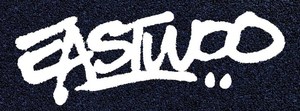
He was the quintessential MC. It’s not hard to hear why: take the re-issue of the vinyl EP Eastwoo, place the needle of your record player anywhere on the record and then listen carefully. You’ll soon understand. East put his voice - the main instrument of a rapper - to incredible use. High-pitched and clear, it was instantly recognizable. His phrasing, as an essential a part of rapping as footwork is in basketball, was always perfect. He was the full package as an MC. East had the vocabulary, the wit and a real message, along with an incredible sense of musical phrasing. East started his career early on. In 1990 he released the song “Le rap ça Tape" on the EP Ethnikolor, a zouk project which enjoyed some success and gave him a foot in the door. He went on tour with the Original MCs group, contributed to the famous “Deenastyle” compilation by DJ Dee Nasty, worked on the EP “A finest fusion of black tempo" by the young composer Bob Sinclar and created his last lyrics in English. Because Olivier Kponton, alias East, of mixed French and Togolese heritage, grew up in Nigeria for the first fourteen years of his life. Perfectly bilingual, East was initially more comfortable in English. At that time, French rap had created an identity for itself but was already influenced by the top names of the New York rap scene of the 90s: Biggie, Mobb Deep and Nas. Following the advice of his friend DJ Cut Killer, he eventually focused on the language of Molière. Naturally gifted and charismatic, East spent his evenings writing, working on his lyrics and making sure he “made the grade". And so the story began...
THE SYMBOL
In the early 90s, the French rap industry was starting out and hip-hop was not considered a real genre. Graffiti hadn’t yet become “street art” and rap was rare in clubs and in the media. Everything was simple, then. Twenty years ago, nobody was in the “game”: they belonged to a “movement” - and that was that. Before becoming known on the microphone, East had earned himself a reputation for his marker graffiti, which he had been involved with since his teenage years. At that time, it was the quality of the work and the number of times and the different places it was reproduced which created a reputation. He himself chose the name “EAST” to represent his hometown of Pantin, to the east of Paris - and that was that. A keen basketball player, he met Cut Killer on the court; he was to become his musical partner, behind the decks. As soon as they met, their musical connection was clear - and that was that. East was the master of ceremonies for the Cut Killer Show on Radio Nova. He hosted the show for a year, interviewing American artists in his relaxed style. With his freestyle raps and unreleased music, East became a recurring guest on the famous mixtapes of his DJ Cut Killer. At that time, expensive access to studio and recording materials was limited. The all-powerful music labels were cautious. Cut Killer and East couldn’t care less: they only needed a four-track, their talent, the radio, word of mouth and the black market of mixtapes to publicise their work - and that was that.
A LEGEND
People within the "movement" met and spent time with EAST at events, hearing his voice on the radio every week. He was hip-hop and he lived hip-hop in its purest form: in the moment and instinctively. Struck down as his star was rising, EAST has left almost no discography at all. All that’s left are epic freestyles broadcast on the radio and couplets recorded on his partner’s mixtapes. EAST left us just as he was reaching his artistic maturity. He was about to take the next step - for example, he was meant to travel to Marseille to rap on Ecole Du Micro D'Argent by the group IAM. AKH was insistent, telling Cut Killer that East’s voice had to appear on the album. This led to the legendary “Enfer”, built around the voice of the deceased MC. When Cut Killer signed his Double H structure with Universal, he made just one demand: the release of the EP Eastwoo in memory of his friend. The DJ re-used the rapper’s acapellas, mixing them with guest artists (Daddy Lord C, Kohndo, IAM, Fabe and Eros) who had spent time with him during his life and who adapted their texts to the subjects of East’s lyrics. These four gems can be found on this re-issue along with the un-released Straight From The Underground. Cut Killer has toured the globe for twenty years and has established himself as the most popular and influential French hip-hop DJ. He’s never wanted to replace his partner in the last twenty years. The aim of the re-issue of Eastwoo, 20 years after the death of East, is not to sell millions. Take this double vinyl collector’s edition simply as an account of an age of innocence in French hip-hop. Enjoy East’s work as a tag, an indelible mark of the life of an exceptional MC who left us too soon.